

5 Common Pickleball Injuries
By Corey Kim, MPT | Registered Physiotherapist | Published January 13, 2026
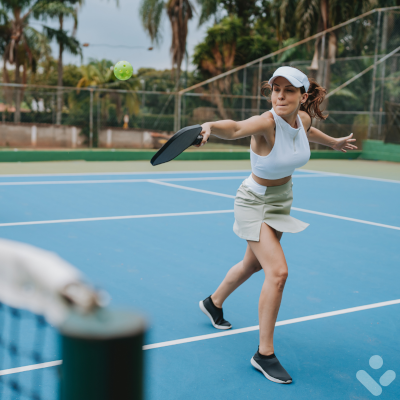
Hi pickleball enthusiasts,
Pickleball is taking the country by storm. It’s an easy, low-impact game that’s fun for all ages and skill levels. It is a popular and inclusive sport that continues to trend in popularity. But as it grows, I’ve seen a lot more pickleball injuries over the last year, and my team and I want to share some of the more common ones—and what to do about them!
Top 5 Pickleball Injuries
● Achilles tendinitis
● Elbow tendinitis (pickleball elbow)
● Rotator cuff tendinitis
● Knee pain
● Wrist fracture
Let’s dive into each one!
Achilles Tendinitis
If you remember Greek mythology from high school or university, Achilles was a Greek demi-god who was dipped into the River Styx to make him invincible but was held by his heel, which remained untouched by the water—making it his weak point. What attaches your calf to your heel is known as the Achilles tendon.
“-itis” is the Greek word for inflammation. Generally, if you have tendinitis, it’s acute inflammation of a tendon. A tendon is the insertion point of muscle to bone. You’ve seen pictures online of a red muscle turning white and attaching to the bone. The white attachment point of this muscle is known as a tendon.
Repeated stress on the heel with sudden or repeated bounding forward is likely the culprit when it comes to Achilles tendinitis. Repeated stretching and contraction of the calf can lead to irritation at the insertion point of the heel. This results in pain in the heel and sometimes a palpable lump several centimeters above it.
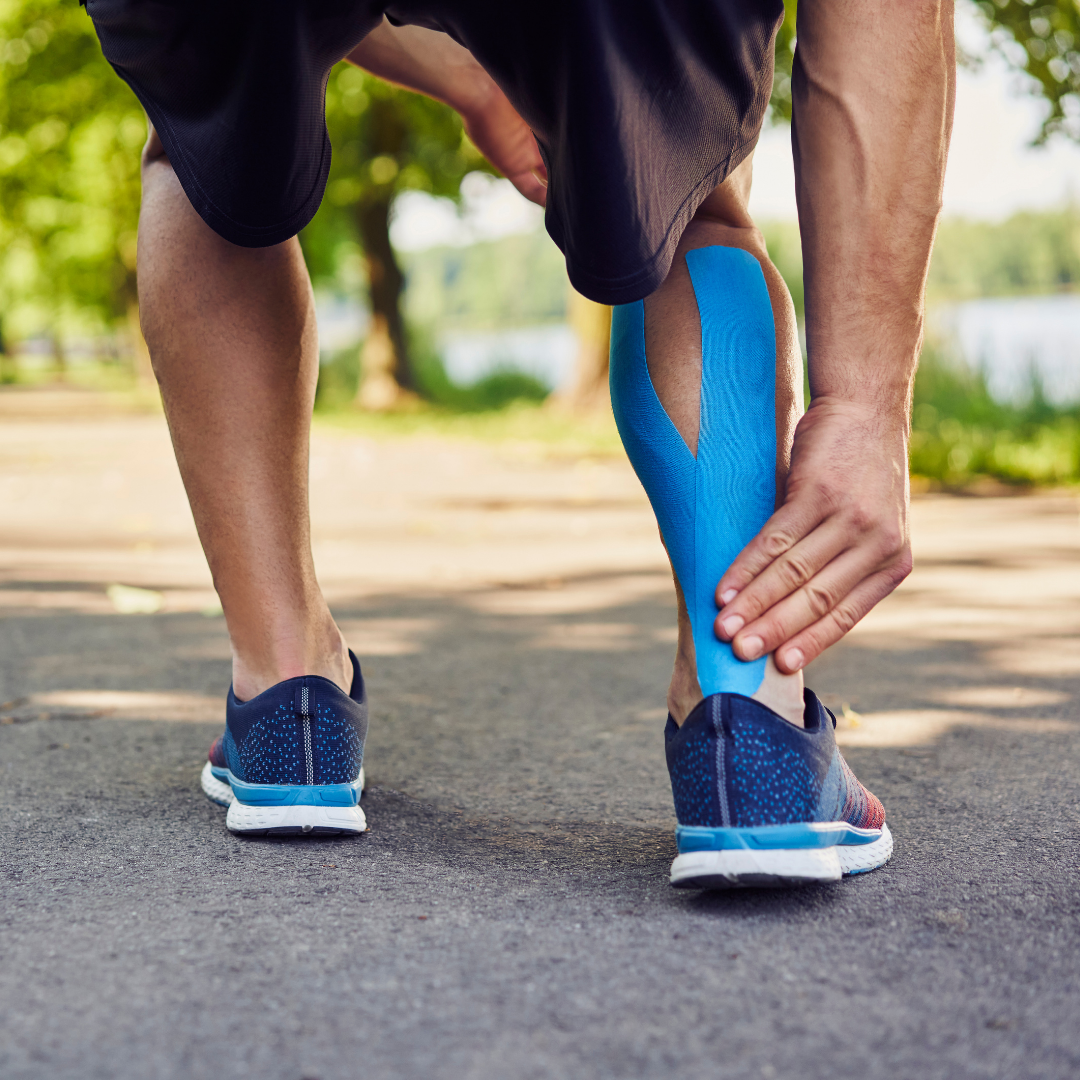
An inflamed Achilles Tendon has been taped to help this athlete find relief.
Why a lump?
Repeated stress leads to tiny tears in collagen in the tendon, causing the fibers to become disorganized and softer. Your body sends cells to clean up the debris and lay down new material, leading to more swelling. New blood vessels are then created along with nerves that generate more pain, resulting in a thickened area.
What do I do if I have this?
This injury is tricky because of several factors. First, your pickleball game is likely creating irritation around that area. You may need to decrease the intensity of your matches or reduce playing frequency to minimize repeated stress.
Next, consider footwear—do your shoes fit well? Does the back of your shoe rub against the tendon? Many times, I see that shoes worn for pickleball are ill-fitting or worn out. This results in repeated rubbing of your tendon against the lip of the shoe, leading to frictional irritation. I often ask my clients to consider purchasing another pair of shoes that do not rub against the Achilles tendon. If my client does not want to purchase new shoes, a heel pad from your local drugstore can decrease tensile loading of the tendon. Other options include adhesive heel slip pads that pad the area of irritation.
Last, but most importantly, does your body need to adapt? In my practice, I find weak muscles in the lower limbs can cause increased overuse of the calf muscle. The important thing is to seek help from a professional—a physiotherapist in this case—to help you identify which muscles need strengthening. Without this key piece, you may be at a standstill with your injury.
Fun Fact for Nerds
A more chronic tendon injury can be classified as tendinosis or tendinopathy. This is more commonly what we see in the clinic. The term was coined when researchers found that many people suffering from tendinitis showed very little inflammation with tissue biopsies. It was discovered that many cases of tendinitis were likely due to changes over time from repeated strain and tissue dysfunction.
Tennis Elbow - or Wait… Pickleball Elbow
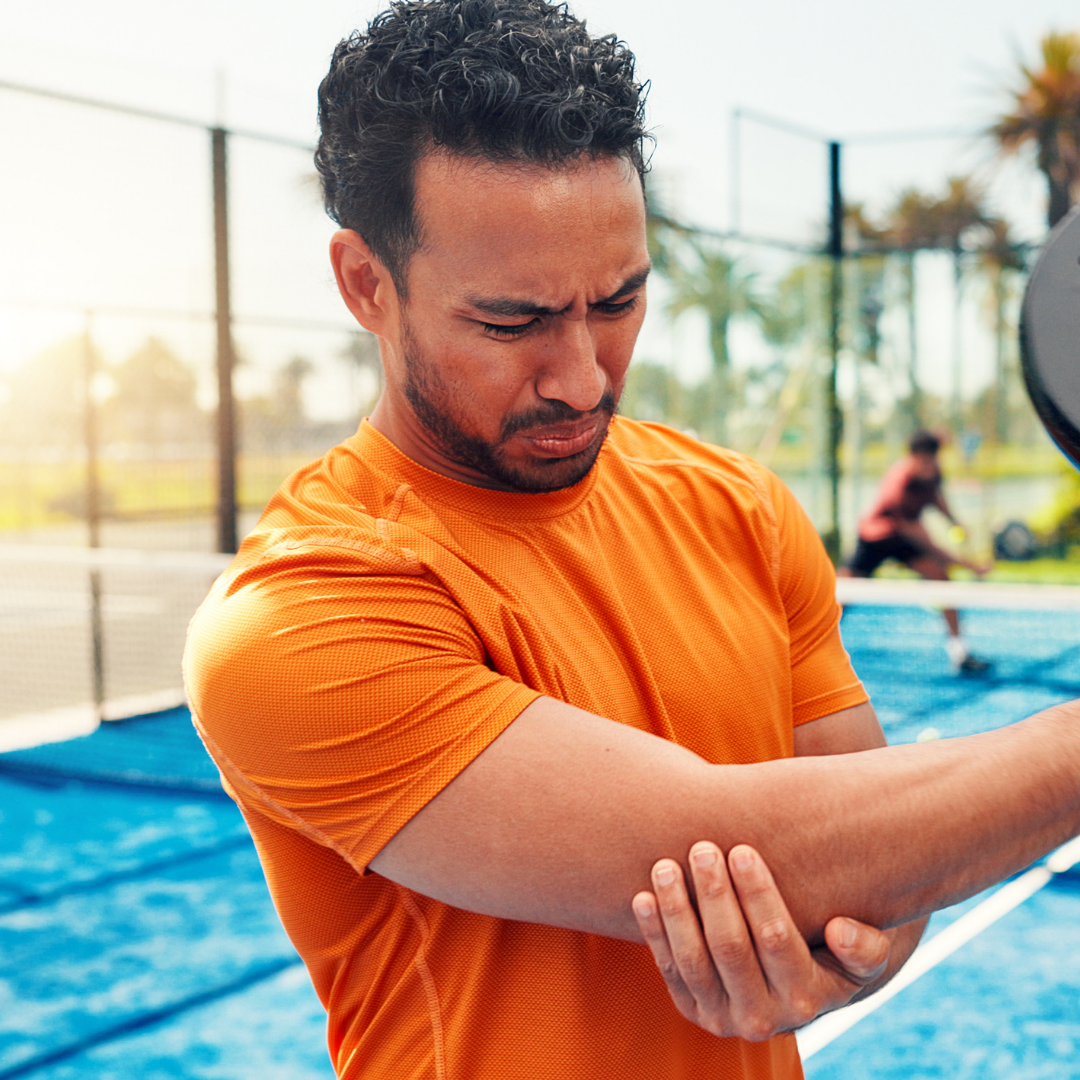
Pickleball Elbow (aka Lateral Epicondylitis) causing pain while playing a match.
Since we are already talking about tendons, let’s chat about the tendons that attach to your elbow. The outer portion of your forearm is important for grip in pickleball. If you put your hand on the table and make a fist, you can see the muscles on top contract. If you trace those muscles to the bend at your elbow, this is where most people feel pain with elbow tendinitis.
Tissue changes at the elbow are a result of repeated gripping with the pickleball racquet, along with the vibration of the paddle hitting the ball. This leads to increased pain with touch and grip. Many people report:
● Pain when lifting the tea kettle
● Pain and limited ability opening jars
● Difficulty turning a doorknob
● Discomfort typing at the keyboard
● Increased ache with repeated serves and volleys in pickleball
What can be done about pickleball elbow?
Simply, a pickleball brace—though I don’t think it’s marketed this way. If you search for a tennis elbow brace, you’ll find a slew of braces that wrap around your forearm. There is usually a gel or foam pad that applies pressure to your forearm to decrease pain at the tendon’s insertion. Generally, it is recommended that you do not put the brace directly on the area of pain. Mechanical pressure against the tendon will cause more pain and irritation. Placing the brace further down the forearm will help with the healing process.
Generally, strengthening is the key. It is also important to note that rest, again, is very important. A healthy balance of recovery with a controlled strengthening program and gradual return to sport is recommended. But I get it—it’s hard to stop playing pickleball because it’s so addicting! Still, you are saving yourself from a more complex injury in the future that could potentially require a more invasive approach. Best to be conservative and care for your body now before it becomes a bigger problem later.
Rotator Cuff Tendinitis
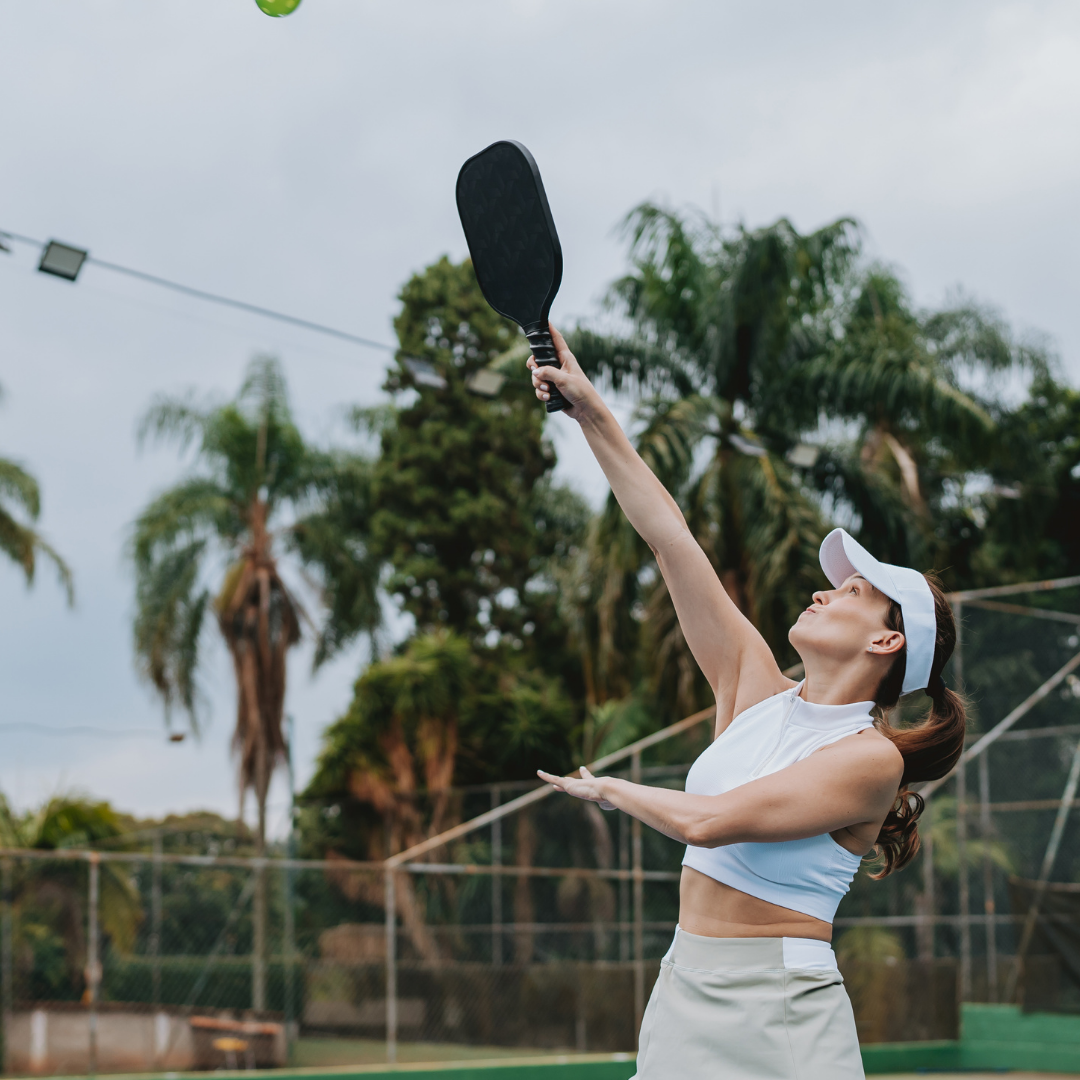
Overhand smash movements are a common source of rotator cuff injuries
Imagine this: you send a nice shot to the corner of your opponent’s court, they lunge to return the ball only to have it fly high in the air. “Perfect,” your brain says. “I’m going to smash this.” You reach overhead at the opportunity and land a powerful blow to damage your opponent’s ego—and now your shoulder. A sharp pain runs through your shoulder, causing you to wince. Your friend asks if you are okay, and in embarrassment you casually shrug it off. You carry on for the rest of the game only to find stiffness and difficulty lifting your shoulder the next morning. After several days with minimal change in your symptoms, you decide to make an appointment with your family doctor. They diagnose it as tendinitis, order an ultrasound, and tell you to go to physiotherapy.
Sound familiar?
Very commonly, the overhead smash can cause pain because of the stress it puts on the joint and muscles. The most common cause I find with my assessments after the pickleball smash is limited mobility in the shoulder and upper back.
As an experiment, try this at home: slouch like a teenager looking at their phone. While maintaining this position, lift your arm forward and upward. If you look at your arm, you’ll notice it stops early. Now try sitting upright like the Queen of England while raising your arm again. Notice your arm goes further?
Limited mobility is the most common deficit I find with these injuries. The question is, do you have a mobility routine that you complete before games? With the internet abounding with infinite knowledge on how to strengthen and stretch, it’s really hard to find something that is right for you. Is it your shoulder joint that is limited in mobility? Is it your spine? Could it be an irritated nerve leading to muscular imbalances? There are too many causes and not enough direction!
My recommendation as a health care professional is to always seek help. Even as a physiotherapist with occasional injuries, I seek the care of other health care professionals to help me see what I can’t on my own. If you’re interested in seeing our approach, click here to visit our website. You can also meet our awesome team who can help you with your injuries here.
Knee Pain
The all-powerful knee sprain prevents many of my pickleballers from playing their beloved sport. The knee is crucial in planting and twisting, transferring force through the weight-bearing load of the back leg to the front. This allows you to generate power through your legs to your trunk and arm, leading to that game-winning point. But it’s that very same planting and twisting at the knee that often causes pain in my clients.
The more common injuries I see in my pickleball-playing clients are:
● Medial Collateral Ligament (MCL) sprain
● Anterior Cruciate Ligament (ACL) sprain or tear
● Medial meniscal irritation or tear
● Patellar tendinitis
● Patellofemoral pain syndrome
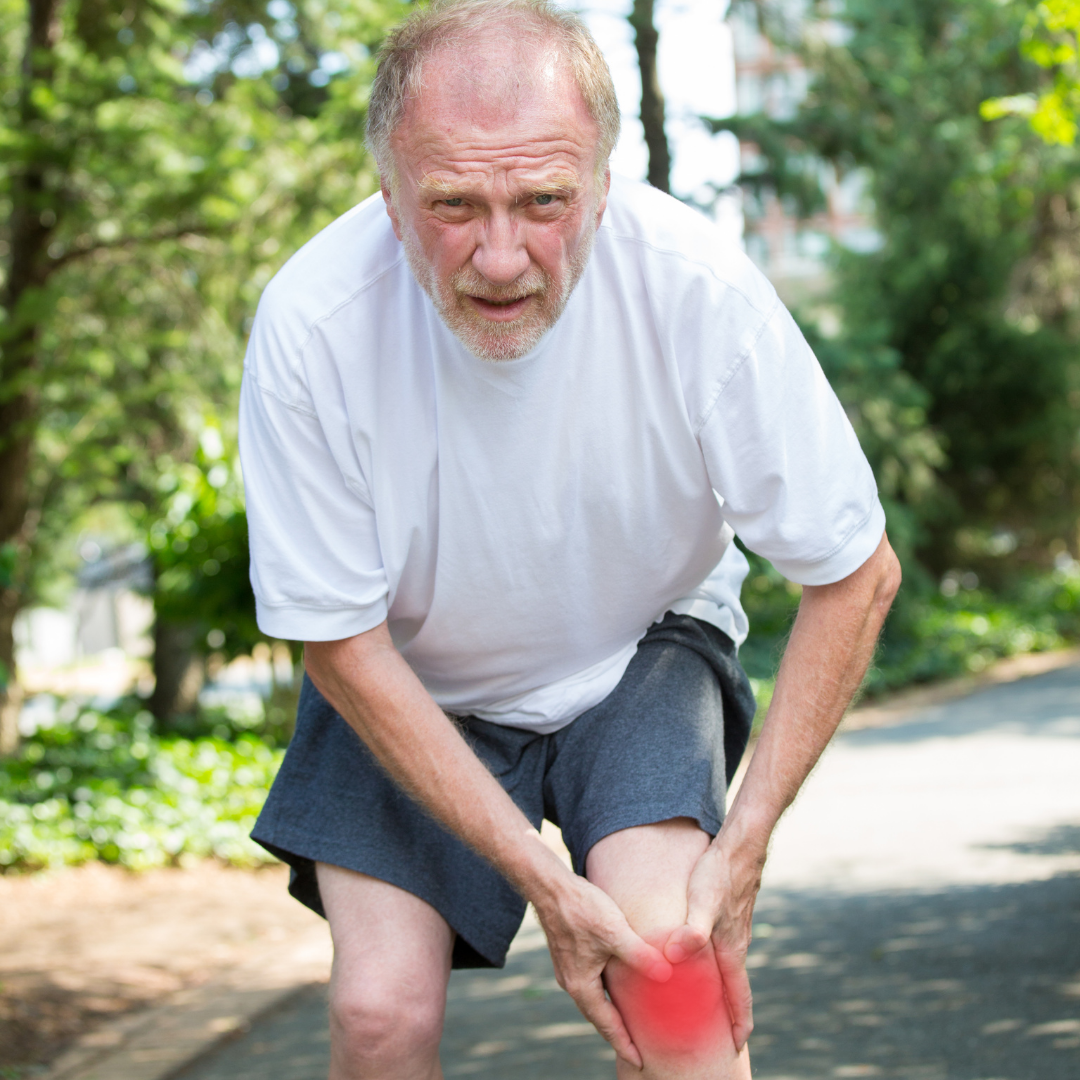
Knee injuries are very common yet can be very confusing - a physiotherapist can help you determine both the cause and solution to your knee pain.
There are many different reasons for knee pain during pickleball.
Here are a few questions to ask yourself to help figure out what factors need to be addressed:
● Do you have back pain?
● Have you had a recent hip injury?
● How are your ankles? Any recent injuries in that area?
● Has there been a slip or fall in the last year or so that wasn’t addressed by physiotherapy?
● Where does it hurt?
Some knee injuries are often part of a full lower limb problem. Racquet sports require us to see the body as a whole. At Break Free Physiotherapy, we look at whole-body systems instead of just one area. We check to see if there are other contributing factors that lead to the knee injury. These details are often missed, so we do our best to find the source of the problem. We are here for you—if you are interested in seeing one of our skilled physiotherapists, click here to book now.
Wrist Fracture
This is another common injury we see in the clinic. It often comes with the territory of falling on an outstretched hand—FOOSH for short. With the arm straight and wrist pulled back to brace the fall, we often see clients fracture the bones around the wrist, which include the radius, ulna, and carpal bones.
Your physiotherapist at Break Free will do a comprehensive assessment to see if you need an x-ray. We have picked up several undiagnosed wrist fractures that required bracing and a specialist appointment. Many of these clients were able to see the professional best suited to help them with their fracture.
Physiotherapy can be the first line of defence in your healthcare journey. Using our training and understanding of wrist injuries, we can help you figure out whether you need to seek emergency services or talk with your family doctor. We want to work with your healthcare team to send you to the right place and figure out where you need to go.
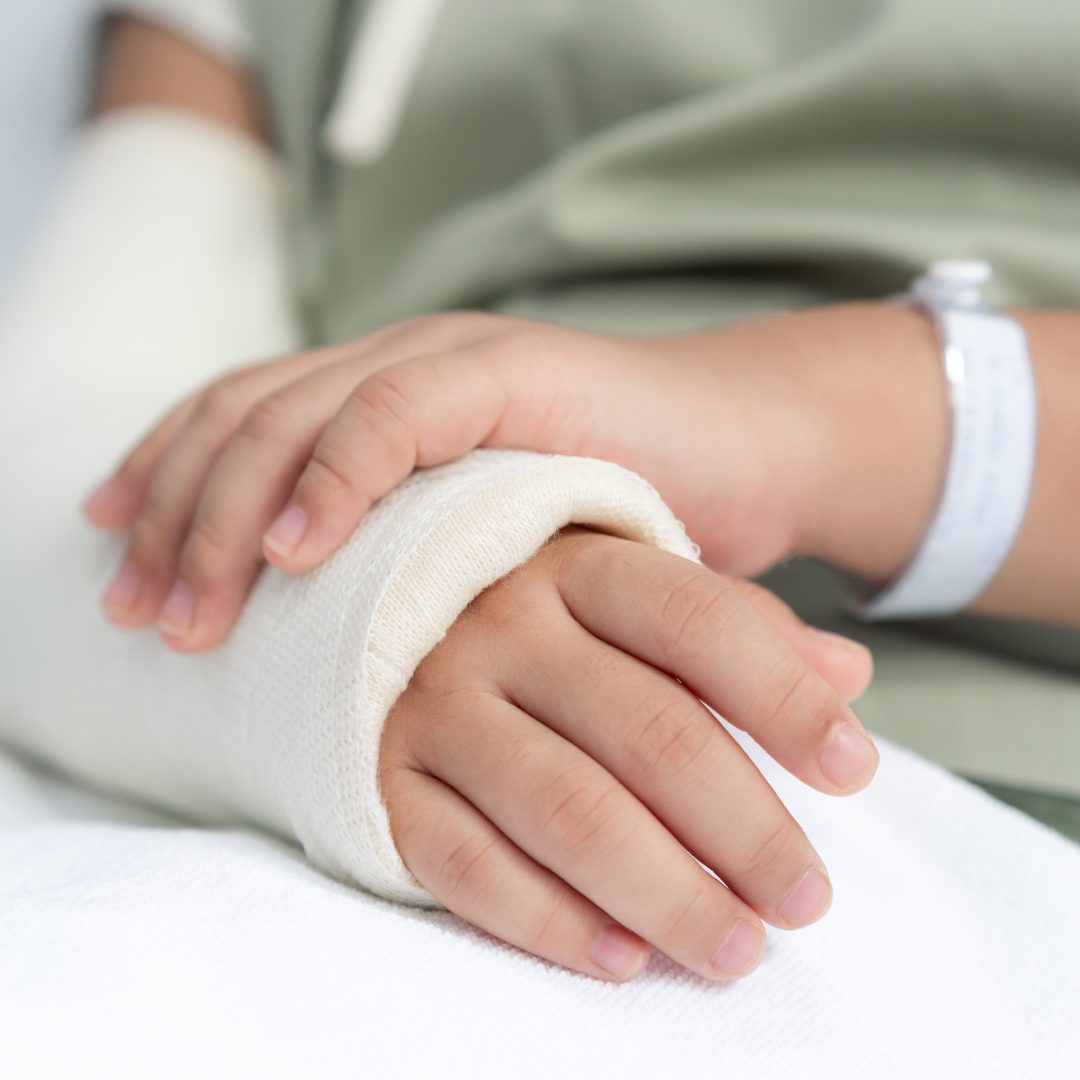
Wrist fractures (especially from a FOOSH) can be common in racquet sports.
Pickleballers Unite!
Over the years, I’ve enjoyed listening to the stories of many pickleball lovers and their passion for the sport. It has been great to see their progress and help them get back to playing with their friends and family. At one time, I also played pickleball at the Bob Hayward YMCA. Many players at that YMCA were very skilled and made me run around the court.
If you’ve got another issue holding you back from participating in pickleball or other recreational activities you enjoy, be sure to check out other services we offer, such as low back physiotherapy and dry needling!
We are always happy to hear that our clients are getting better and can return to what they love doing. If you have an injury that is limiting your progress or need insight, Break Free Physiotherapy is the clinic for you. Give us a call, send us an email, or head to our Jane booking page to meet with us so we can help you do what you love.

Corey Kim
Physiotherapist
Written by Corey Kim, MPT, Registered Physiotherapist & Co-owner of Break Free Physiotherapy and Wellness in London, Ontario. With over 10 years of clinical experience, Corey holds a Bachelor of Arts in Kinesiology and a Master of Physical Therapy from Western University. He is passionate about helping patients find pain relief through movement and believes in empowering people with knowledge of how the body heals. Read Corey's full bio →
