
Tissue Healing
By Tarra D'hoine, MPT | Registered Physiotherapist | Published April 30, 2026
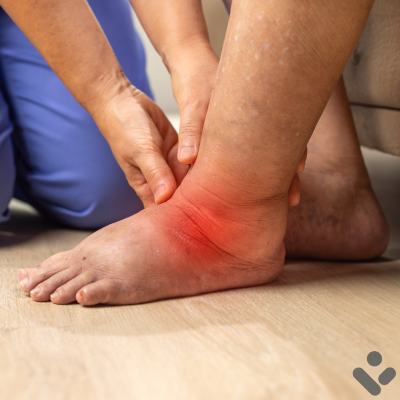
How long will this take to get better?
How long will it take for this to get better? When can I go back to lifting weights? How long before I can run again? When can I lift my grandchild? Will I be ready for my upcoming trip?
These are all questions that a lot of our clients ask at Break Free. We all have expectations and deadlines as our lives are busy with families and significant life events we want to be ready for. The question is how long will it take for my injury to heal?
The short answer is that it depends on the situation and the individual. I’ve asked Tarra, one of Break Free’s brightest, to share about the science behind tissue healing. To you Tarra!
Tarra
Working as a physiotherapist, one of the main questions people ask me is, how long will it take to get better? The goal of this blog is to go a layer deeper in what happens during recovery. Breaking down the timelines and how physiotherapy can aid in each stage of recovery!
To really understand what is going on, we are going down to the cellular level of healing!
Soft tissue:
The soft tissue in our body helps support and protect us - these include our muscles, tendons and ligaments (to name a few). Although these soft tissues provide different functions in the human body, one of the big components that make up each of these tissues is collagen.
Collagen
Collagen plays a very important role in healing, as it is a structural protein in our body. It helps make up the framework of your cells and tissues. Generally speaking there are two types of collagen tissue, type I and type II (we come back to these later!)
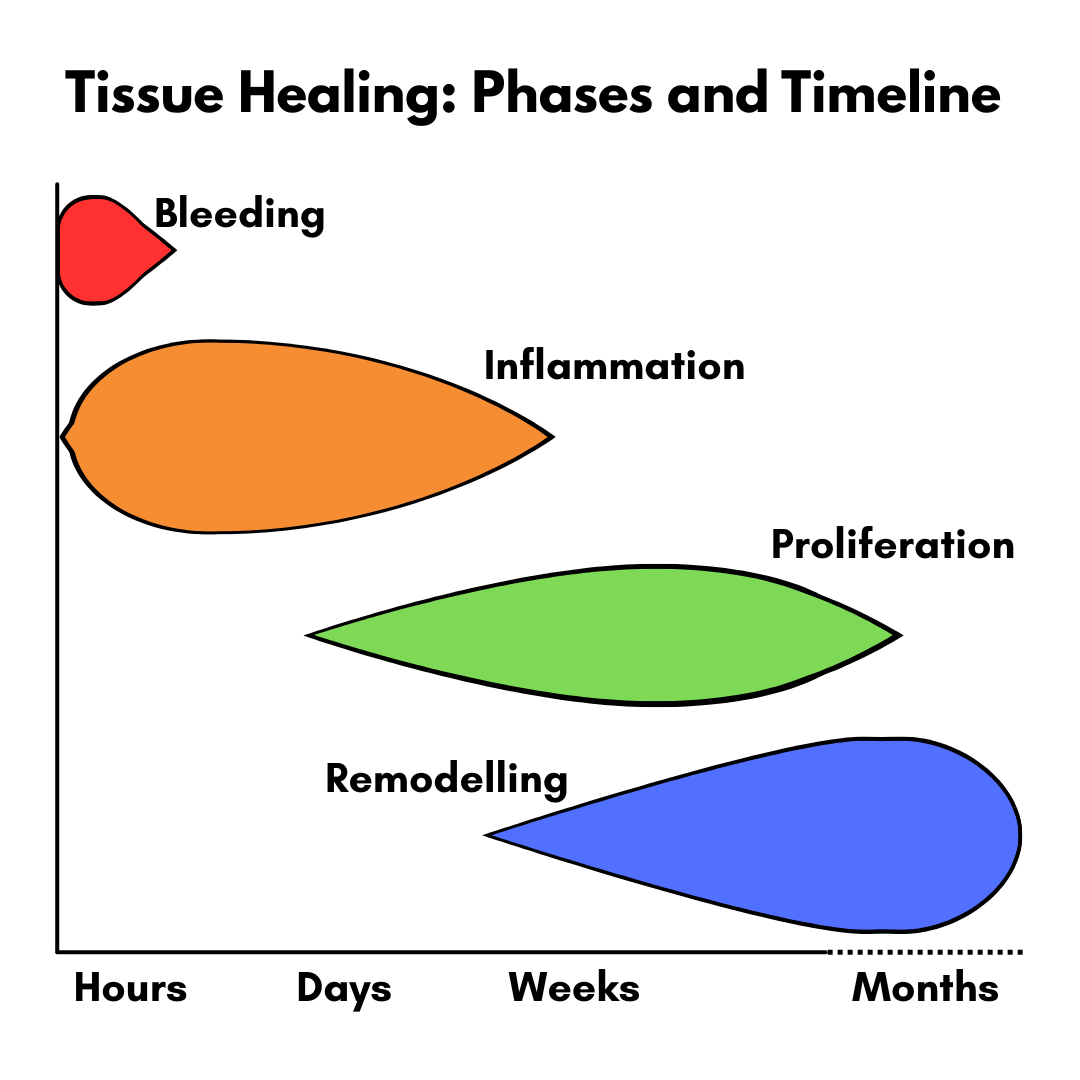
Our soft tissue will follow 4 stages of healing after an injury. This includes bleeding, inflammation, proliferation and remodelling. It is important to note these stages are not in isolation and will often overlap (as pictured in chart).
Stages of Healing:
Stage 1 - Hemostasis (bleeding)
This first stage happens within seconds of the injury. It is the first and shortest phase of healing. In a recent injury, tiny blood vessels tear as a result of the injury and the body’s first job is to seal those vessels in order to create a stable environment for healing. An example is when you pull a muscle, ligament, or tendon after an injury, it generally feels tight. Your muscles will stabilize the area reflexively to allow for appropriate healing. Then, your body uses platelets (cells in your bloodstream) to clot the area or stop the internal bleeding. Once the bleeding stops, a chemical signal is sent out next to bring in other cells to clean up the area of injury. Which leads us to…
Stage 2- Inflammation
The second stage of healing is called inflammation. This stage will typically start within minutes of the injury and lasts 1-3 days (although some components of this stage can continue for up to 3 weeks). The goal of this stage is to clear out the injured tissue and prepare for the healing process. Although the inflammatory response is often unpleasant, it is essential to trigger the next steps of healing!
Signs and symptoms of the inflammation stage include:
Redness
Heat
Swelling
Pain
Loss of function
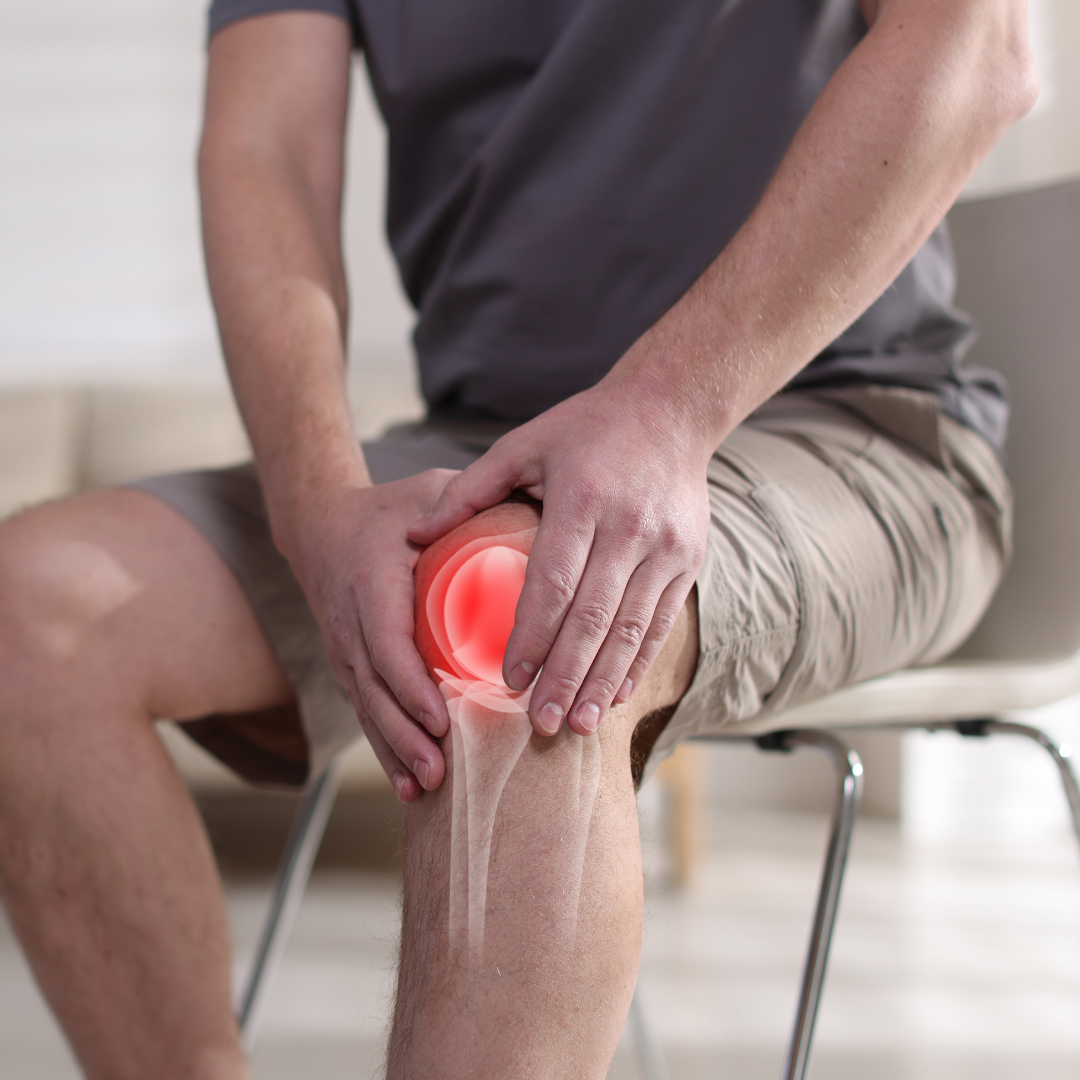
This image depicts an inflamed knee displaying signs of redness, heat, swelling, and pain.
What do I do during this stage?
Our goal during this phase is protecting the site of injury while starting to promote healing. Although we are often familiar with the acronyms PRICE or POLICE for managing acute injuries, most recent research is now supporting the acronym PEACE AND LOVE!¹
| P |  |
Protect the area - Reduce activity that aggravates the injury for the first few days to let things settle |
| E |  |
Elevate - Lift the affected area above your heart to decrease swelling |
| A |  |
Avoid Anti-inflammatories - This may actually impede healing if taken during the early stages |
| C |  |
Compress - A wrap or sleeve can help manage swelling while providing support |
| E |  |
Educate - A physiotherapist can empower you with reassurance and guide you with evidence based information |
| & |  |
|
| L |  |
Load - Once things calm down - gradually introducing tissue to mechanical stress and promote tissue healing |
| O |  |
Optimism - Positive mindset can help improve your pain outcomes and recovery - your physio is a great support to keep you positive! |
| V |  |
Vascularization - Light activity can introduce more blood flow which supports healing! |
| E |  |
Exercise - A targeted, specific exercise to progressively restore confidence and improve mobility and strength |
Physiotherapists are able to help you promote PEACE & LOVE. Your physiotherapists can help advise how to protect the area, how and when to start to safely load the injured area! Different from previously used acronyms, movement and loading the injured area (in a safe way) is actually promoted during this stage. Physiotherapists can work with you to determine the safest loading strategies depending on your injury. Your physiotherapist can also figure out which stage of healing you are in and provide the right exercises so that you do not injure yourself early on.
Stage 3 - Proliferation
Proliferation is the third stage of healing, and composes the first step of the rebuilding! This third phase starts 3-4 days after the injury and will last around 6 weeks (but will vary depending on the soft tissue that was injured and the degree of damage).
Proliferation itself means “a rapid increase in number”. During this stage our bodies start to rapidly form granulation tissue over the site of injury. This granulation tissue is composed of collagenous scar tissue (collagen) and new blood vessels. Due to the rapid placement of this collagen, it's not as strong as normal, healthy tissue! It initially places type II collagen until the body can replace it with type I collagen. A good way of thinking about this is that type II collagen is the scaffolding until the final, stronger product can be placed (type I collagen).
How will a physiotherapist help me in this stage?
Early mobilization! Remember the collagen placed in the stage is not the “final product” and is often laid down quickly, and this means that it is laid down unorganized. If we can appropriately load this area with exercises or mobilizations by your physiotherapist during this stage, we can help promote the right direction of this tissue placement.
Stage 4 - Remodeling:
This last stage of healing is the longest of the 4 stages! This stage will start approximately 6 weeks after your initial injury. This stage can last up to 3 years! Over time your body will replace the weaker collagen placed in the proliferation stage and replace it with stronger type. Slowly replacing the scaffolding with the final product.
What can physiotherapy do in this stage?
More movement! It is really important to keep the area of injury moving during this stage and to progressively load and strengthen the tissue. Your physiotherapist has the goal of strengthening the tissue’s capacity to withstand all the forces using resistance exercises! This remodelling is important so you can function in daily activities or sports!
Great, thanks for the science lesson. So how long will my injury take to heal?
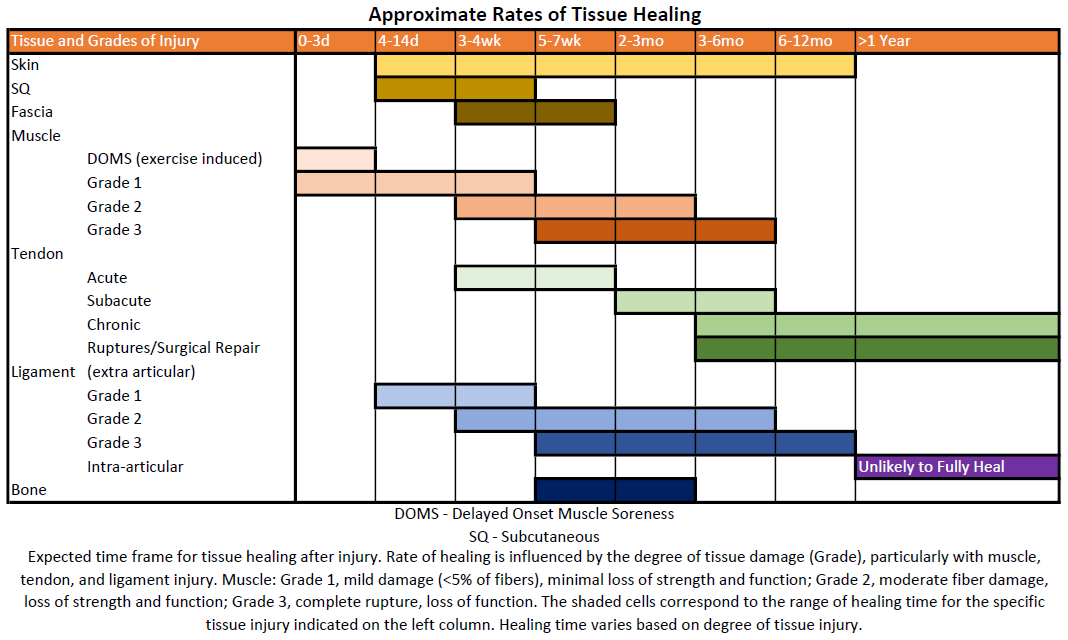
Excellent question! It all depends on the type of tissue you’ve injured. Most soft tissue in your body generally follow the same stages of healing, but the time in each stage can vary depending on the type and severity of injury. Here is a chart that shows the type of tissue and how long it may take to heal. ⁶
What else can delay my healing?
There are many reasons. Here are some common ones that may can potentially create longer healing times:
Older Age
Genetic factors
Substance use
Previous injuries
Metabolic influences - example is type 1 & 2 diabetes
Activity levels - too little or too much can delay healing!
Type of injury (degree of damage & tissue)
How can your physiotherapist help?
A physiotherapist listens to your story to see what stage of healing you are in. They ask questions to see what your goals are and build understanding around what is causing your pain. They then use manual testing to confirm their diagnosis and provide you with a management strategy that matches your stage of healing. They may also use modalities like dry needling or acupuncture to help decrease pain faster. This can also result in the exercises prescribed to become more effective.
Come see us!
Is someone in your family struggling with an injury? The goal of this blog is not only to help you understand the natural stages your tissue will go through while healing but helping educate you on optimizing your recovery. If you or a family member are unsure what stage of healing you are in or what to do, come see one of our skilled physiotherapists today!
Looking for more information on low back tissue injuries and what to expect? Click here!

Tarra D’hoine
Physiotherapist
Hi there! My name is Tarra. I completed my undergraduate degree in Hamilton at McMaster University obtaining an Honours Bachelor of Science in Kinesiology. I then returned to my hometown of London to complete my Master of Physical Therapy at Western University.
My approach to physiotherapy care is simple, it revolves entirely around you. I want to work with you to identify your goals and determine how physiotherapy can help you achieve them. Using a focus on education, self-management, and exercise-based rehabilitation, I aim to empower clients to reach their goals. [full bio]

Corey Kim
Physiotherapist
Written by Corey Kim, MPT, Registered Physiotherapist & Co-owner of Break Free Physiotherapy and Wellness in London, Ontario. With over 10 years of clinical experience, Corey holds a Bachelor of Arts in Kinesiology and a Master of Physical Therapy from Western University. He is passionate about helping patients find pain relief through movement and believes in empowering people with knowledge of how the body heals. Read Corey's full bio →
References:
Dubois B, Esculier J-F. Br J Sports Med 2020;54:72–73. Accepted 16 July 201
https://www.physio-pedia.com/Healing_Phases_and_Therapeutic_Exercise
