
TMJ Physiotherapy in London, Ontario
Jaw Pain, Clicking & Headache Relief — Without Surgery
Pop! Click! Grind! Ow!
Have you heard your jaw do this while you’re eating or talking? Or do you get tension headaches from clenching your teeth due to stress? Your dentists says you need a night guard and you still wake up with a sore achy jaw…
You may have an issue with your TMJ!
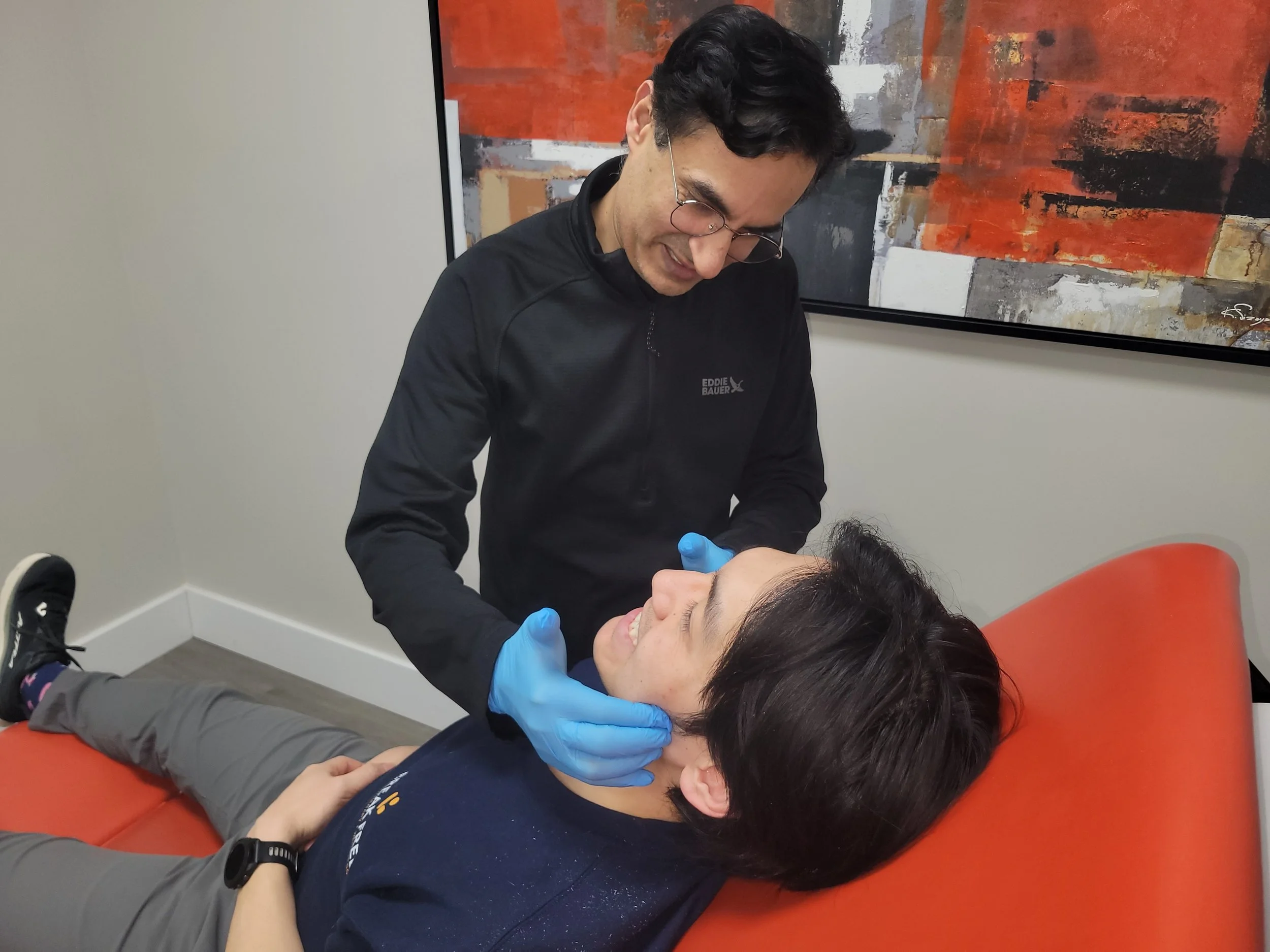
Our physiotherapy clinic specializes in helping people with TMJ (temporomandibular joint) problems using hands-on therapy, dry needling, acupuncture and, most importantly, exercise to relieve jaw pain!
We want to help you restore jaw movement and avoid use of medications and surgery.
What is TMJ Disorder?
The temporomandibular joint (TMJ) is the the point where your jaw connects to your skull. The joint, disc, muscles and tissues become irritated and tight causing:
Jaw pain when chewing, talking or yawning
Clicking or popping sounds
Locking jaw
Facial tension
Headaches or migraines
Ear pain or pressure
Teeth clenching (bruxism)
Neck pain associated with jaw tension
Many of our clients see a dentist first, which is great! But in many cases, TMJ dysfunction is a muscular issue and responds extremely well to physiotherapy.

Normal Motion of Articular Disc
Why Choose Physiotherapy for TMJ Treatment?
A mouth guard or dental appliance can help decrease pain, but it may not be enough. Physiotherapy can help with:
Muscular tightness around the jaw and neck
Trigger points along the chewing muscles
Restricted temporomandibular joint
Stiff and sore neck muscles
Tight upper back muscles
Postures that worsen your pain
We treat jaw pain using conservative, evidence-based care focused on helping you stay better with exercises!
Physiotherapy is the first line of treatment for muscular related TMJ pain. If your jaw pain is caused by muscular tension, weak muscles and motor control issues, we got your back (or jaw in this case)!
Our Treatment Approach
We provide a comprehensive TMJ assessment to determine whether your symptoms are joint-related, muscular, or both.
Manual Therapy for TMJ
At Break Free, we use:
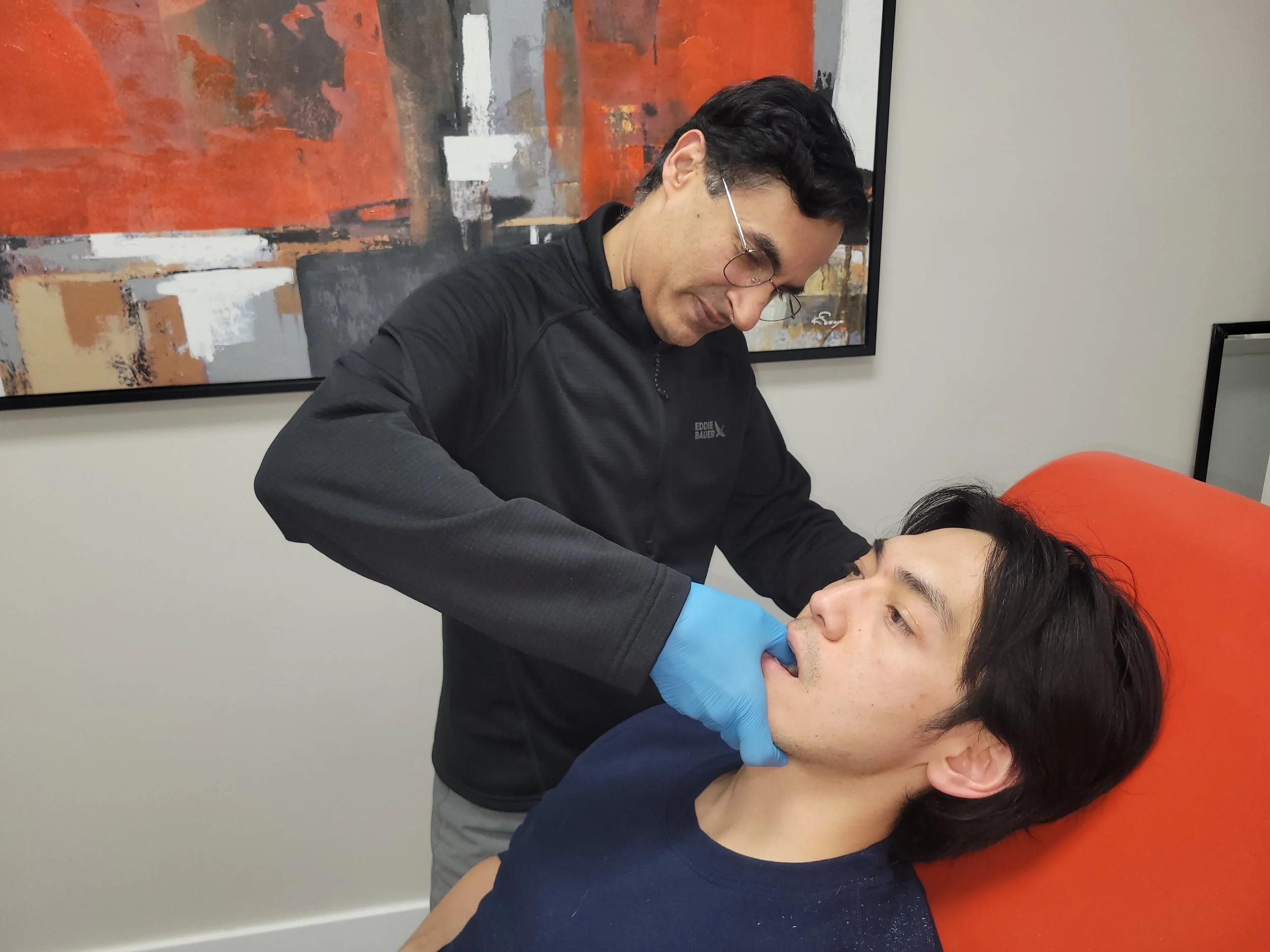
Hands-on joint mobilization
Soft tissue release of neck and jaw muscles
Intra-oral muscle work (when appropriate)
Neck, upper back and shoulder treatment
Dry Needling for Jaw Pain
Dry needling helps release:
Deep trigger points
Chronic muscle guarding
Jaw clenching patterns
Many patients experience noticeable relief within the first few sessions.
If you want to learn more about dry needling click here.
Acupuncture for TMJ & Headaches
Acupuncture can:
Significantly reduce pain intensity
Reduce inflammation
Decrease muscle tension
Calm the nervous system
Improve jaw opening
Improve chronic pain patterns
Conditions We Treat:
Chronic jaw pain
Myofascial pain related to teeth clenching/grinding
TMJ headaches
Post-dental procedure jaw pain
Stress-related jaw tension
What to Expect at Your TMJ Assessment
Your first visit includes:
✔ A comprehensive jaw, neck and upper back assessment
✔ Movement testing to look for restrictions
✔ Jaw muscle and joint evaluation
✔ Clear explanation of your diagnosis and causes
✔ A personalized treatment plan
We focus on identifying the root cause — not just managing symptoms, and we give you exercises to stay better!
Why Patients in London Choose Our Clinic for TMJ Care
Focused TMJ expertise
Providing you exercises to help you heal
Dry needling & acupuncture to manage pain
One-on-one sessions
Personalized treatment plans
Evidence-based care
We are not a general “quick treatment” clinic. We take the time to address the mechanical drivers of your jaw pain and provide you long term solutions.
Book With Us to Help You Find Freedom From Jaw Pain!
If you need help to:
Stop jaw clicking
Reduce headaches
Improve jaw movement
Relieve chronic tension
Learn More About TMJ
Here is a blog that Corey wrote on TMJ problems!
TMJ Physiotherapy Frequently Asked Questions
-
We can definitely reduce the pain that comes with grinding and teeth clenching teeth (bruxism) at night. Your physiotherapist can coach you on how to relax your muscles during the day and give you exercises and relaxation techniques to relieve tight muscles. It’s important that are using a dentist-prescribed night splint to help reduce the effect of bruxism when sleeping.
-
In your first session, your physiotherapist will ask you to move your jaw which can increase clicking and soreness in your jaw temporarily. Letting us test this helps us understand what is contributing to your pain leading to the exact stretches you need to find relief. Many of our clients report reduced clicking and improved jaw mobility when they complete care with us!
-
Oh absolutely! Not only stress, but hormonal changes can be a factor like increased estrogen and reduced testosterone in women. Your physiotherapist will work on your posture and help you release muscles in your neck that can cause increased overuse of certain muscles in your jaw.
-
Yes, but it’s important that you’re doing the right ones for your injury. There is a lot of information on the internet that provide generic exercises that may help temporarily or perhaps even make you worse. It’s important to have a physiotherapist take a look at your case to help you save time and only doing the exercises you need to get better.
-
After 2-4 weeks of targeted treatment, but it could be longer depending on the severity. Starting early and sticking to a treatment plan with exercises can significantly improve your outcomes.
-
Yes. TMJ physiotherapy is typically covered under extended health benefits for physiotherapy, acupuncture, or dry needling services in Ontario. We direct bill to many companies and can also provide receipts for reimbursement.
-
Many patients begin noticing improvement within 2–4 visits.
Chronic cases may require a structured plan over several weeks, depending on:
How long you’ve had your jaw injury
How severe it is
Contributing neck or posture issues
Stress-related clenching patterns
We’ll outline realistic expectations at your first appointment.
Learn more…