
Hip Pain Physiotherapy in London Ontario
Does this sound familiar?
My hip aches when I get up from sitting
I limp a little after walking for a while
I can't sleep on my side anymore
It hurts to put on my socks or shoes
I feel a pinch in my hip when I squat or climb stairs
My hip locks up or catches
I've been told it's just arthritis and there's nothing to do about it

Hips can be just as tricky to treat as shoulders. There's the ball-and-socket mechanics, a whole network of deep muscles, and a direct connection to your lower back that can make it hard to know what's actually going on. You need a guide who can help you navigate all of this and understand exactly which exercises you need. Our clinic helps narrow down the exercises you absolutely need, so you can get better in a timely manner.
Conditions We Treat
Here are some conditions we treat at Break Free Physiotherapy:
Hip osteoarthritis
Hip bursitis
Labral tears
Hip impingement (femoroacetabular impingement)
Hip flexor strain
Piriformis syndrome
Groin and adductor strain
Snapping hip syndrome
SI joint dysfunction
Post-surgical hip rehabilitation
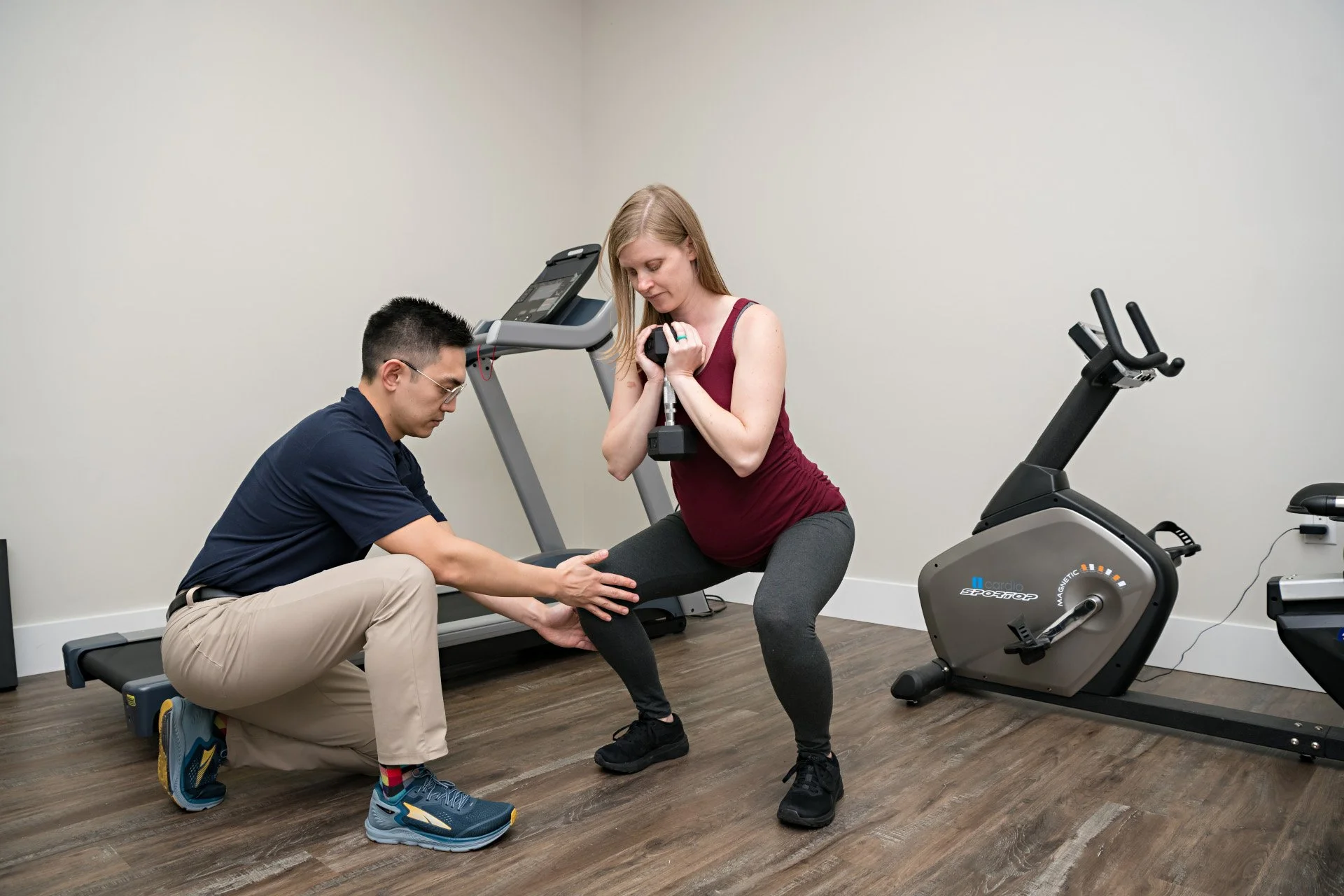
Hip pain during pregnancy or postpartum
Hip pain referred from your lower back

We look at every injury through an investigative lens, rather than chasing pain by treating symptoms alone. The better we understand what's actually driving your hip pain, the better we can equip you to manage it yourself — which means less reliance on us long-term, and more confidence in your own body moving forward.
Mechanical Diagnosis and Therapy (also known as the McKenzie Method) is used at Break Free to help us diagnose and classify your condition. By listening to your history, we're able to accurately pinpoint where we think the problem may lie. Your examination will help us figure out whether your hip joint, the muscles around it, or your lower back are what's causing your injury.
Our Approach to Hip Pain
Hip and back pain get confused more often than you'd think — the nerves and muscles around both areas overlap significantly, and a problem in one can easily show up as pain in the other. That's why we always screen your spine as part of a hip assessment, not just when something in your history points that way.
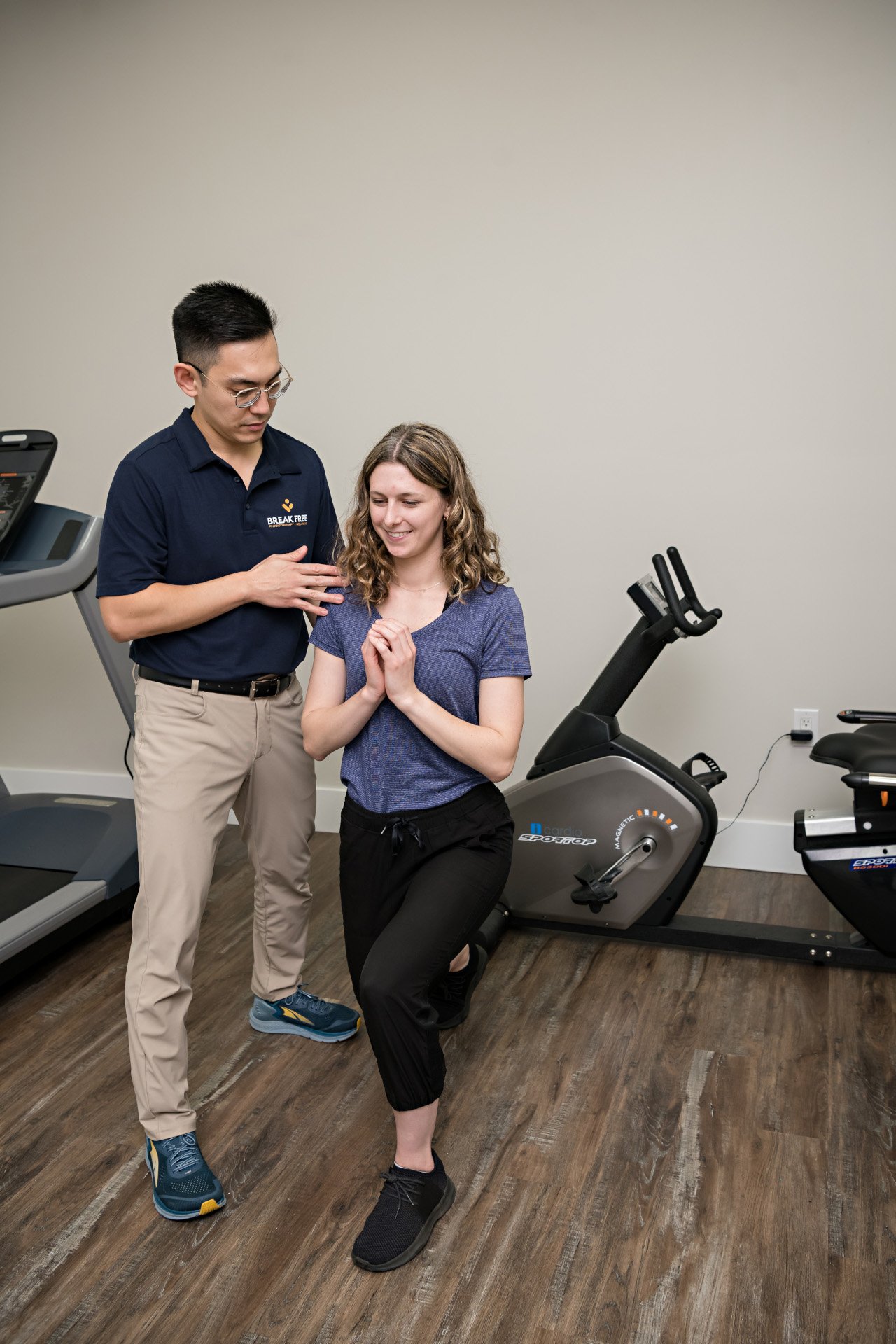
We will move your hip and spine in specific directions repeatedly to help us look for patterns. These patterns help us understand the cause of your injury and allow us to accurately give you targeted stretches or exercises to help you move better. Instead of giving generic exercises for a specific condition, we make sure the movements we give you are tailored to your body's needs.
What to Expect at Your First Visit
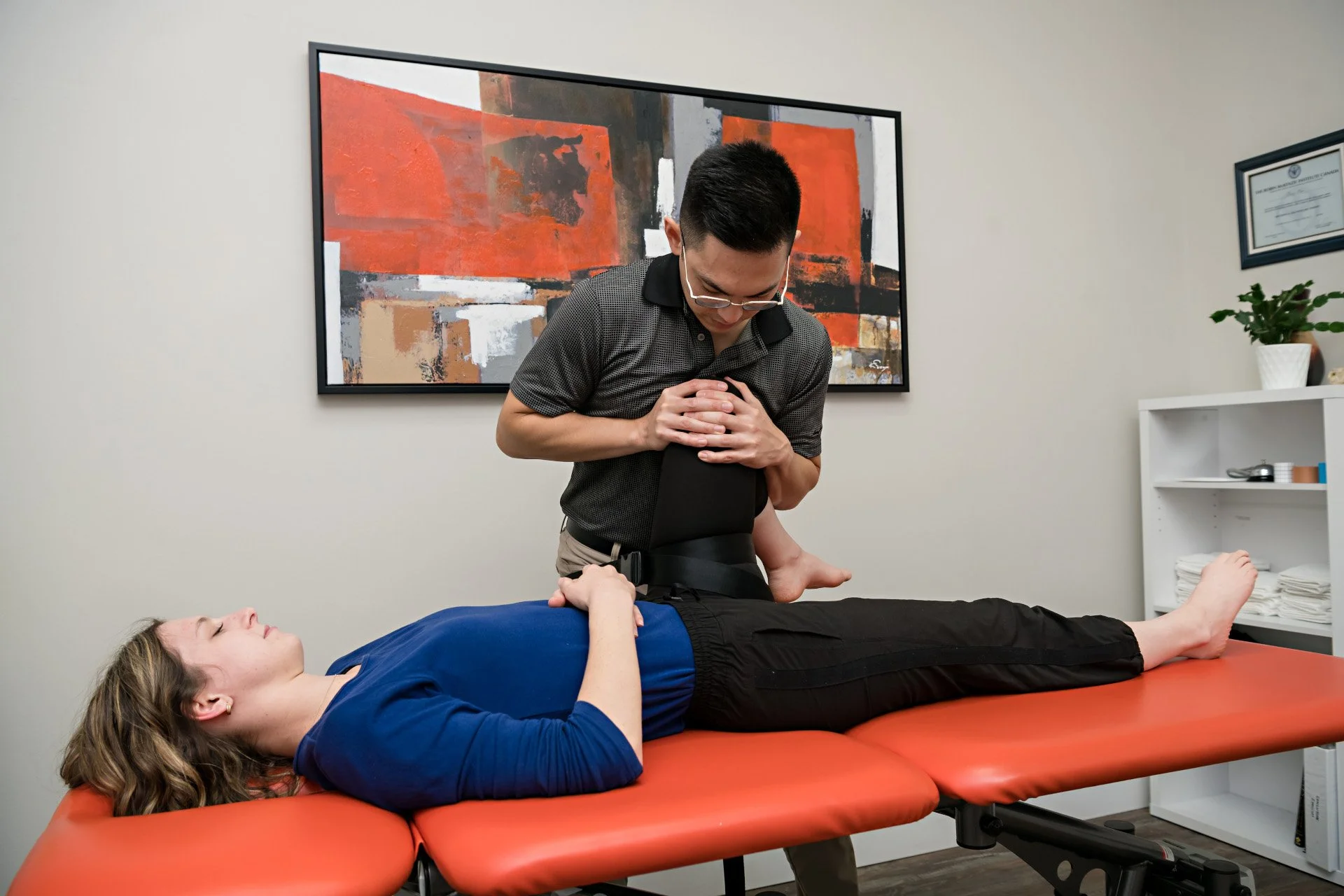
We'll start by taking a detailed history to understand when your injury started and what makes it worse or better, asking clarifying questions along the way to get a full picture before we begin the assessment. We then complete a hands-on examination to check the range of motion and strength of your hip. With your permission, we'll also screen your lower back to rule out whether it's contributing to your hip symptoms.
We'll then walk you through what your condition is, roughly how many visits and how long recovery may take, and give you specific movements or exercises to take home with you.
Does Physiotherapy Help Hip Pain?
Yes, physiotherapy can be the first line of defence for most hip injuries. Whether your hip pain is recent or something you've dealt with for years, your physiotherapist will help you understand the potential causes of your pain and how you can change or modify what you do in daily life to relieve it and get back to doing what you love.
Frequently Asked Questions
How long does hip pain physiotherapy take?
It depends on your injury. Muscular or tendon-related hip issues often start improving within a matter of weeks, while more chronic conditions — like long-standing arthritis or something you've dealt with for years — typically take longer to resolve. If your hip pain is coming mostly from your spine, a rapid change in your very first session is actually a great sign, and tends to indicate a more favourable prognosis and quicker recovery.
Do I need imaging before starting?
No! It's a common myth that you need imaging before starting physiotherapy for hip pain. Your physiotherapist is trained to use special tests to determine what structure in your hip could be involved, or whether your spine is contributing to your symptoms.
Can physiotherapy help hip arthritis, or do I need a replacement?
In many cases, physiotherapy can meaningfully reduce pain and improve function in hip arthritis without surgery being the next step. That said, if your joint has degenerated significantly and conservative treatment isn't giving you relief, a hip replacement may eventually be the right option — and physiotherapy plays an important role both before and after that surgery too.
My back doesn't feel sore at all — how can my hip pain be coming from my back?
It's a common myth that you need back pain to have a back-related hip issue. Your back can be the source of your hip symptoms even when it feels completely fine on its own — that's exactly why we screen the spine as part of every hip assessment, not just when someone mentions back pain.
Can a stiff hip also cause back pain?
Absolutely — a stiff or restricted hip can force your lower back to compensate and take on more load than it should, which can lead to soreness there too. Learn more about back pain here or how to figure if your hip or back are what’s causing your pain here.
It's time to see a professional to find out what the source of your problem could be. See one of our skilled physiotherapists trained in MDT to properly classify your injury and give you exercises tailored specifically to your body. Let us help you with your healing journey today.
Book Your Assessment Today: http://breakfreephysio.janeapp.com/
Struggling to Move Your Hip?
Related Hip Pain Resources
Check out our free blog articles to learn more about hip pain, assessment, and treatment strategies: