

Disc Bulge: What It Actually Means (and Why It's Not as Scary as It Sounds)
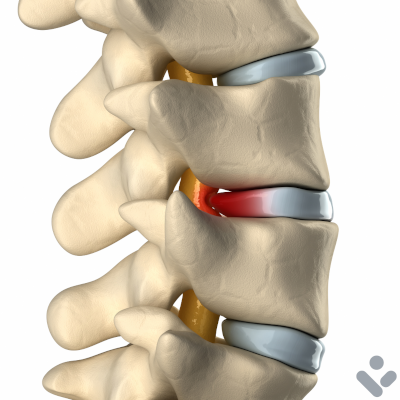
By Corey Kim, MPT | Registered Physiotherapist | Published August 4th 2026
I see this all the time. A client comes in with their MRI report and says, "Look here Corey, I have a disc bulge! That means my back is messed up. I guess I'm going to have this for the rest of my life." An MRI report can often produce fear and anxiety in my clients, which leads to endless Google searching and forum scouring to see if surgery is the next step. But I believe that getting more information before jumping toward a discectomy is usually the better path.
What Is a Disc Bulge, Really?
Discs are the shock absorbers of the spine. Your spine is made up of alternating bones and discs that house your spinal cord, which allows your brain to move your body.
The disc itself has a gel-like center made of large molecules that act like sponges, pulling in water and allowing the disc to maintain its shape under pressure. The annulus is a tough outer ring made of layered bands of collagen that wrap around the nucleus, containing it. There are also cartilage endplates at the top and bottom of the disc, connecting it to the vertebrae (bones of the spine) and allowing nutrients to flow in and out.
A disc bulge is when the disc itself spreads outward slightly beyond its normal boundary, without necessarily breaking the annulus.
Disc bulges are extremely common and present in large numbers of people with zero pain. A study by Brinjikji et al. found that many people have incidental disc bulges on imaging, and the likelihood increases as we age. Basically, you can have a disc bulge show up on an MRI without having any pain at all.
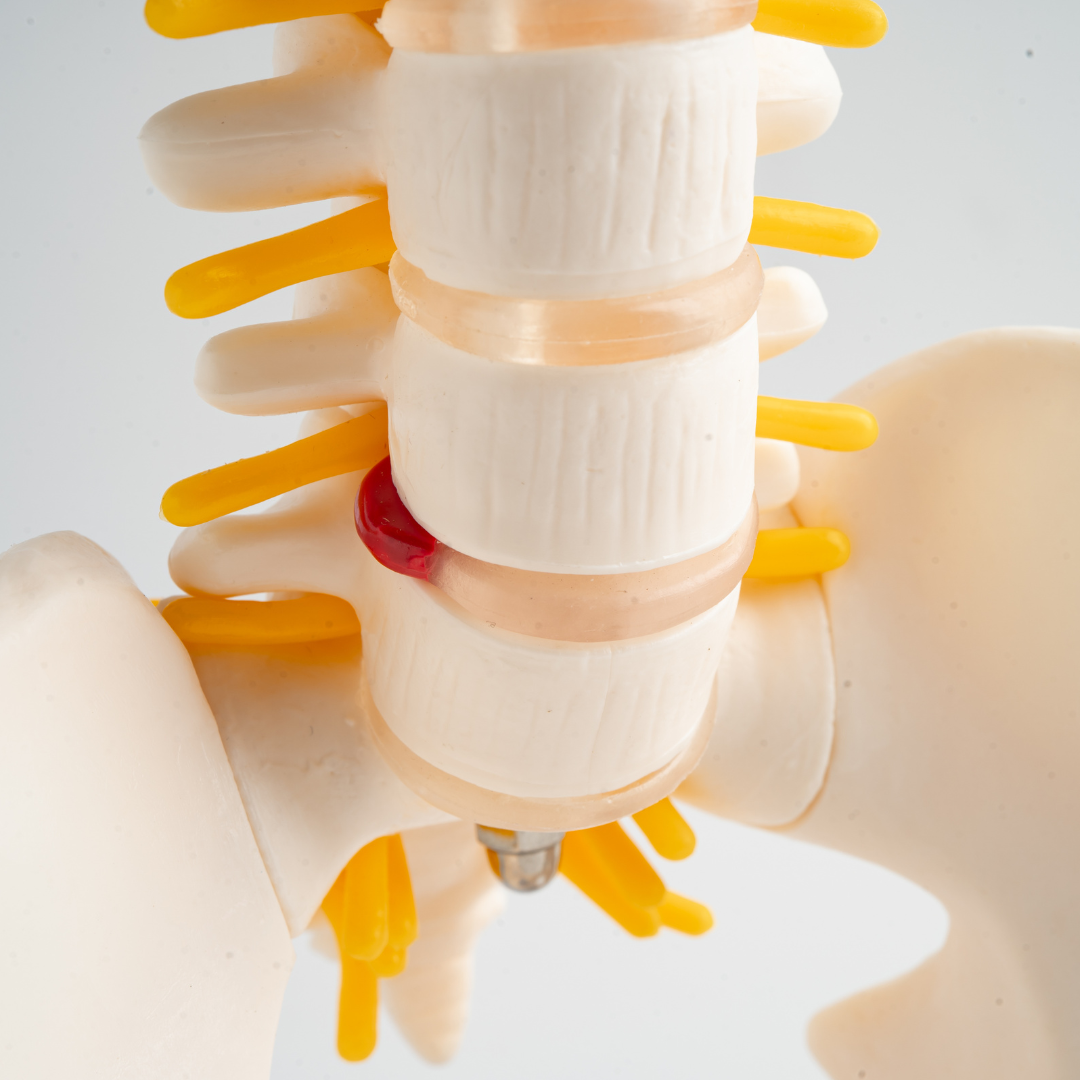
This model depicts a bulging disc between vertebrae.
Why the Word "Disc Bulge" Sounds Scarier Than It Actually Is
Sometimes the word "disc bulge" can create more fear than the actual finding on the MRI itself. A study by O'Keeffe et al. in 2022 gave 1,375 people the exact same back pain scenario, and randomly assigned each one of six labels: disc bulge, degeneration, arthritis, lumbar sprain, non-specific low back pain, or episode of back pain.
People who were given the label "disc bulge" reported:
A higher perceived need for imaging
A higher perceived need for surgery
A higher perceived need for a second opinion
Lower expectations for recovery
Every participant had the exact same underlying scenario, but the scarier the label, the stronger the belief that imaging, injections, or even surgery was required. These labels also caused people to expect a worse recovery.
The point is that the word "disc bulge" itself is doing damage — not the image.

A man is nervous after hearing the term '“disc bulge” and is overwhelmed looking at answers online.
What Causes a Disc Bulge?
A disc bulge is often part of the natural aging process. Discs generally don't have their own blood supply, so they get nutrients through the endplates instead. As we age, the endplates gradually thicken and calcify, which slows that nutrient supply down. Fewer nutrients means the cells in the disc can't keep up with repair, leading to age-related breakdown.
As we age, our discs also hold less water, meaning less height and less shock absorption. Also, the annulus's collagen fibers become less organized, lose strength, and the outer wall becomes less taut — and that's what leads to the bulge in your spine.
Does a Disc Bulge Mean You Need Surgery?
No — in many cases, pain associated with a disc bulge is managed well with physiotherapy and exercise. Surgery is usually reserved for exceptional circumstances. One example is if there's no change with conservative management, you have leg-dominant pain that's significantly affecting your daily function, and even cortisone injections aren't helping — surgery may be indicated. Even then, you'll want a physiotherapist trained in understanding pain and neurological symptoms like tingling, numbness, and weakness to help assess whether surgery is genuinely necessary.
How Physiotherapy Helps a Disc Bulge
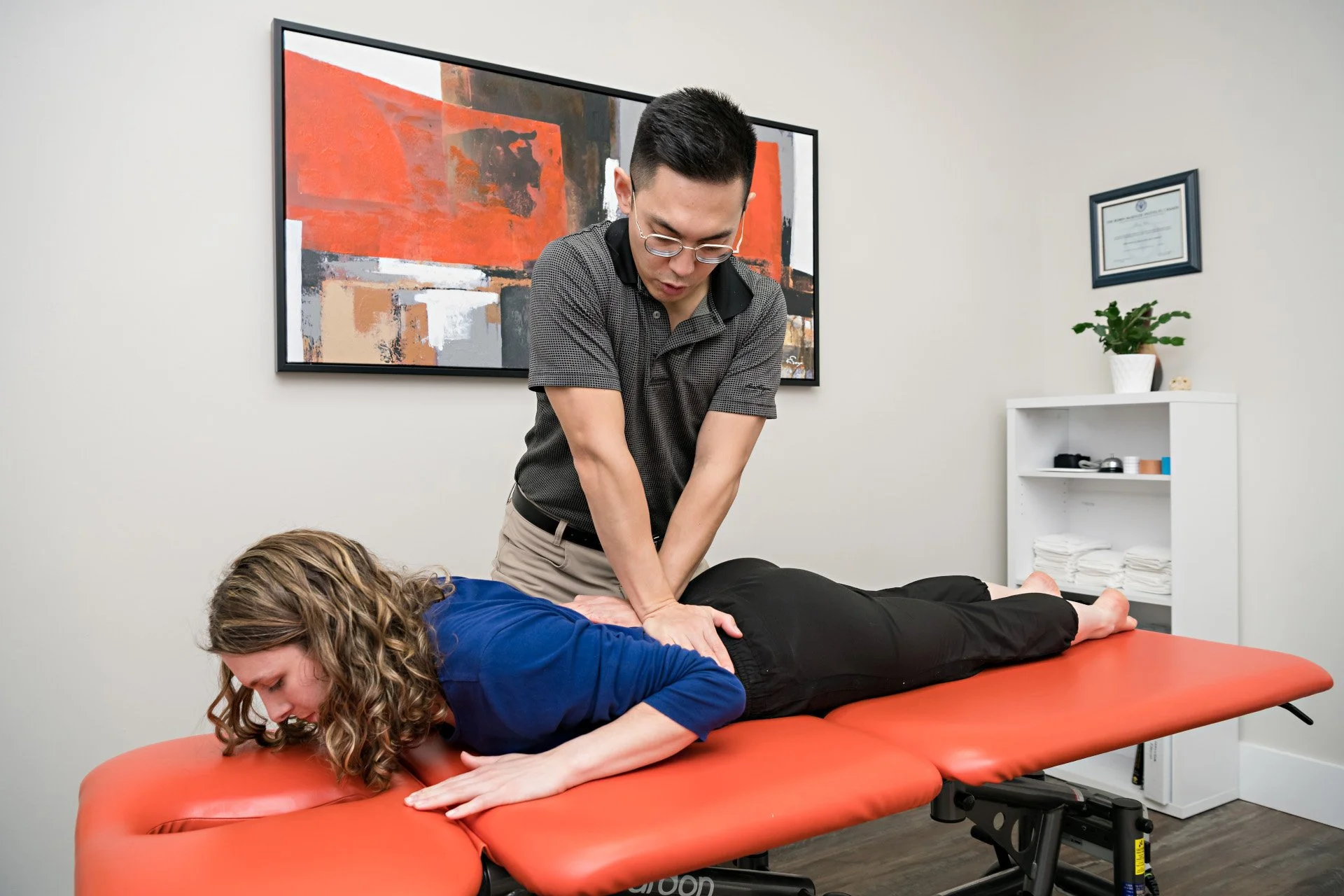
Clinicians trained in MDT are able to help. MDT stands for Mechanical Diagnosis and Therapy. Physiotherapists who use this methodology use a repeated movement assessment to see if your leg or back pain centralizes. Centralization is when symptoms that are further away from your spine begin to disappear or travel closer to your spine. It can also mean the surface area of your pain shrinks. Here is a blog about centralization and peripheralization here.
Signs that your lower back is improving include:
Decreased pain
Increased strength
Improved range of motion
Potentially decreased or resolved tingling and numbness
To understand more, see our sciatica blog here.
What to Expect at Your First Visit
We'll start by taking a detailed history — when this started, what makes it better or worse, and what's actually bothering you day to day. We'll screen for any red flags before anything else. Then we complete a hands-on assessment, including repeated movement testing, to see what direction of movement changes your symptoms — for better or worse.
We're not just confirming what your MRI said. We're finding out how your body actually responds right now, which tells us far more about your treatment plan than the image alone ever could. You'll leave your first visit with a clear explanation of what we found and a specific plan built around it — not a generic sheet of "core exercises for back pain."
Does Physiotherapy Help a Disc Bulge?
Yes. The goal isn't to make the bulge disappear on a follow-up scan — it's to find the movement and position that reduces your symptoms and get you moving confidently again. In many cases, disc bulges settle on their own over time regardless of treatment, but physiotherapy helps you understand what's actually going on, move through it safely, and avoid the fear and inactivity that often make things worse than the finding itself ever was.
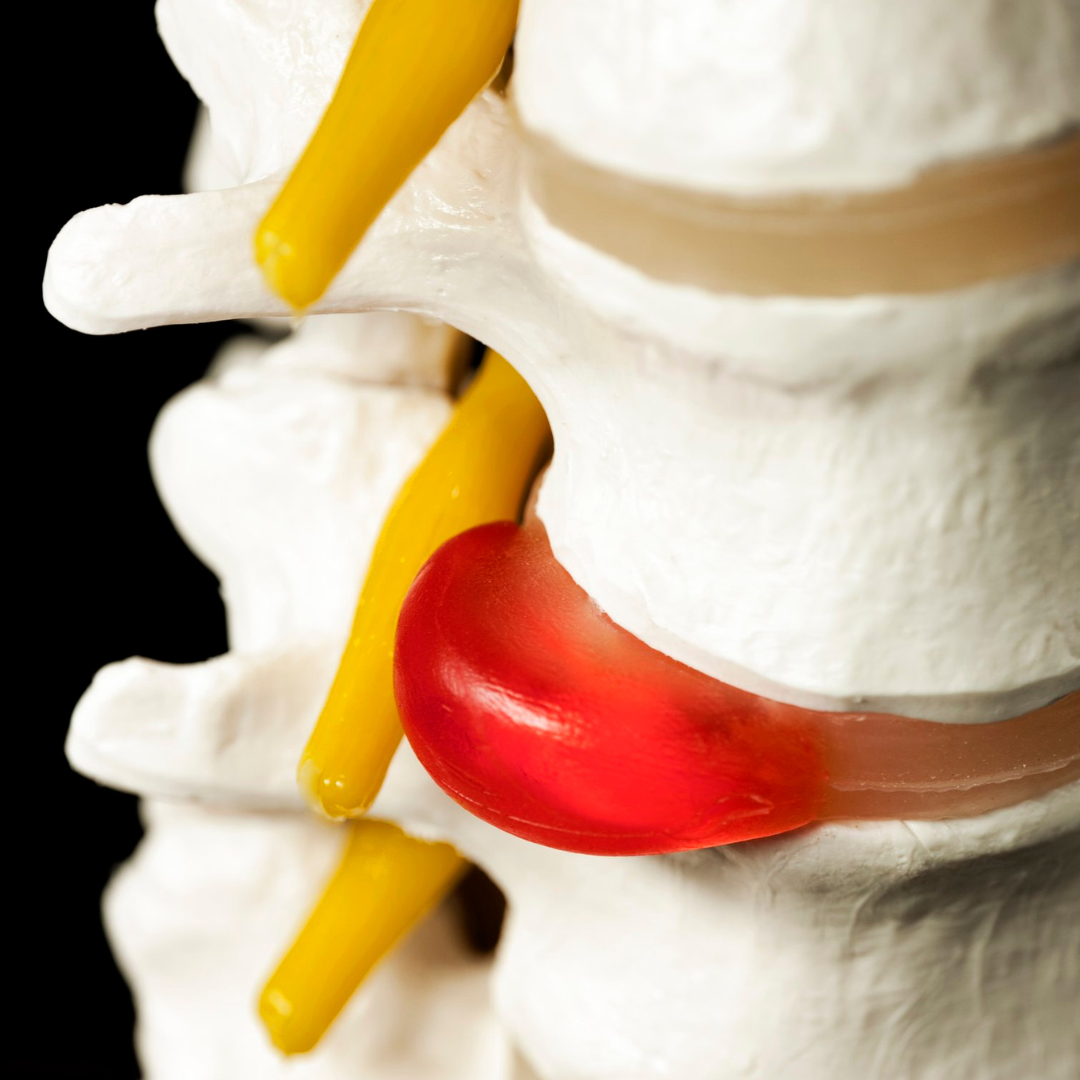
This model depicts the annulus's fibers losing strength and becoming less taut leading to a disc bulge.
Frequently Asked Questions
Will my disc bulge heal on its own?
In many cases, yes — research on spontaneous regression has shown that disc material can shrink and reabsorb over time without surgery, and interestingly, larger disc issues tend to resolve more often than smaller ones. That said, pain settling down and the disc itself changing on a scan are two different things — you can feel completely better long before, or even without, any visible change on a follow-up MRI. What actually predicts a good outcome has more to do with how you respond to movement than what the image shows.
Does a disc bulge always cause pain?
No — this is actually one of the most well-documented findings in the research. Disc bulges show up extremely often on MRI in people who have no back pain at all, and that likelihood only increases with age, meaning it's a normal part of how spines look over time, not necessarily a source of symptoms. Just because a bulge is there doesn't mean it's the reason you're hurting, and just because you're hurting doesn't always mean the bulge is why.
Is a disc bulge the same as a herniated disc?
Not quite, though the terms get used interchangeably a lot. A bulge is a broad, diffuse extension of the disc around a large portion of its edge, most often related to normal aging changes. A herniation is a more focal, localized displacement of disc material through an actual tear in the outer wall. They're related but distinct — and the distinction can matter for how we approach your treatment.
Are You Ready to Understand Your Pain Without the Labels That Are Holding You Back?
We are here to support you in your recovery, and provide illumination when it feels like there is no hope. We want to ensure that you understand the things that are causing your pain and give you small changes that will lead to better function in life.
If you are looking for someone to walk with you along your health journey, book with one of our physiotherapists using JaneApp. If you want to learn more about back pain, check out our other blogs and pages below.
Related reading: Lower Back Pain Physiotherapy | Do You Need an MRI for Back Pain? | Sciatica: What It Is, What Causes It
Book Your Assessment: http://breakfreephysio.janeapp.com/
References
O'Keeffe M, Ferreira GE, Harris IA, Darlow B, Buchbinder R, Traeger AC, Zadro JR, Herbert RD, Thomas R, Belton J, Maher CG. Effect of diagnostic labelling on management intentions for non-specific low back pain: a randomized scenario-based experiment. European Journal of Pain. 2022;26(7):1532-1545.
Brinjikji W, Luetmer PH, Comstock B, et al. Systematic literature review of imaging features of spinal degeneration in asymptomatic populations. American Journal of Neuroradiology. 2015;36(4):811-816.
Chiu CC, Chuang TY, Chang KH, Wu CH, Lin PW, Hsu WY. The probability of spontaneous regression of lumbar herniated disc: a systematic review. Clinical Rehabilitation. 2015;29(2):184-195.

Corey Kim
Physiotherapist
Written by Corey Kim, MPT, Registered Physiotherapist & Co-owner of Break Free Physiotherapy and Wellness in London, Ontario. With over 10 years of clinical experience, Corey holds a Bachelor of Arts in Kinesiology and a Master of Physical Therapy from Western University. He is passionate about helping patients find pain relief through movement and believes in empowering people with knowledge of how the body heals. Read Corey's full bio →
